
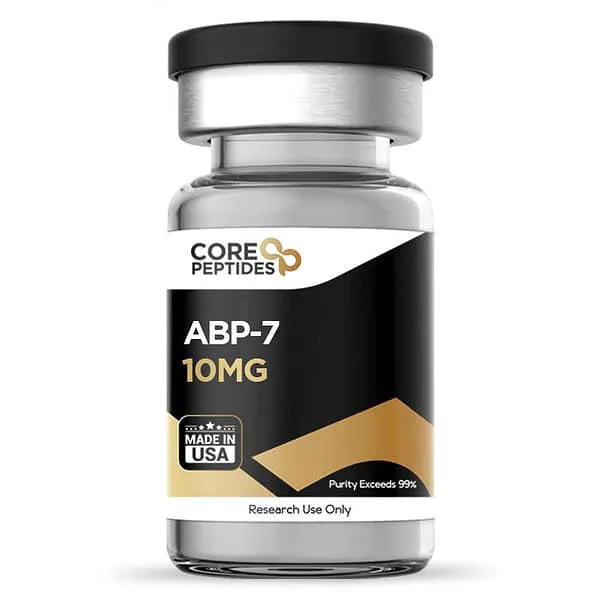
ABP-7 (10mg) is a laboratory-grade research peptide developed for scientific studies involving actin dynamics, cell migration, and cytoskeletal organization. Supplied as a lyophilized powder, it offers researchers a reliable material for peptide research. This product is intended exclusively for laboratory research and is not for human or veterinary use.
What Is ABP-7 (10mg) and Why Is It Studied?
ABP-7, also known as Actin Binding Peptide 7, is a synthetic seven-amino-acid peptide derived from the actin-binding region of Thymosin Beta 4. Researchers study ABP-7 to better understand protein interactions, cellular structure, and actin regulation. Laboratories choose high-quality ABP-7 to support consistent, reproducible research and reduce variability between experimental studies.
How Does ABP-7 (10mg) Work?
ABP-7 is designed to support laboratory investigations into the interaction between peptides and the actin cytoskeleton. Researchers use it to explore how actin influences cell movement, cytoskeletal remodeling, and protein signaling within experimental models. By examining these molecular interactions, scientists can better understand the mechanisms that regulate cellular organization and structural stability. High-quality ABP-7 helps minimize inconsistencies that may arise from poor peptide quality, supporting more reliable experimental outcomes. As a synthetic fragment related to Thymosin Beta 4, ABP-7 remains an important research tool for peptide chemistry, molecular biology, and cell biology investigations.
Who Can Use ABP-7 (10mg)?
ABP-7 (10mg) is intended for qualified professionals conducting legitimate laboratory research. It is suitable for universities, research institutions, biotechnology companies, pharmaceutical research teams, and independent laboratories investigating peptide science. Researchers studying actin biology, cell migration, cytoskeletal organization, and protein interactions may include ABP-7 in controlled experimental protocols where appropriate. Laboratories seeking consistent peptide quality often prioritize reliable sourcing to improve reproducibility and data confidence. ABP-7 is supplied strictly for research purposes only. It is not intended for human consumption, clinical use, therapeutic applications, or veterinary use.
Benefits of ABP-7 (10mg) for Research
Researchers value ABP-7 because it may support studies involving:
- Investigating actin-binding mechanisms
- Exploring cytoskeletal organization
- Supporting cell migration research
- Examining protein–protein interactions
- Studying cellular signaling pathways
- Advancing peptide structure-function research
- Contributing to molecular biology investigations
- Supporting regenerative biology research models
- Providing consistent material for controlled laboratory studies
- Helping improve research reproducibility through high-quality peptide sourcing
ABP-7 (10mg) Dosage
ABP-7 (10mg) is supplied as a research chemical. There is no established dosage for human or veterinary use. Researchers should use this product only within approved laboratory protocols and determine handling, preparation, and experimental quantities according to their specific research design and institutional guidelines.
Why Choose Peptide Shop AU for Purchasing ABP-7? (50 Words)
- Australian supplier focused on research peptides
- High-quality laboratory-grade products
- Secure and protective packaging
- Reliable batch consistency
- Dedicated customer support
- Fast Australia-wide shipping
- Research-use-only compliance
- Trusted source for scientific laboratories
- Commitment to quality control
- Designed to support reproducible research
Our Related product BPC-157
Be the first to review “ABP-7 (10mg)”
Related products
Reviews
There are no reviews yet.